Mercado Libre Joins São Paulo Climate Week
Panels covered everything from mobility and the bioeconomy to risk management and economic resilience
Mercado Libre was actively involved in the conversations at São Paulo Climate Week, held in São Paulo from August 3 to 7. The event featured more than 230 activities organized around six key areas: energy, industry and transportation; forests, oceans and biodiversity; agriculture and food systems; resilient cities; human and social development; and finance and technology.
Invited to contribute to some of these topics, Mercado Libre took part in several sessions throughout the week, with discussions on sustainable transportation and logistics, bioeconomy, productive inclusion, and economic resilience.
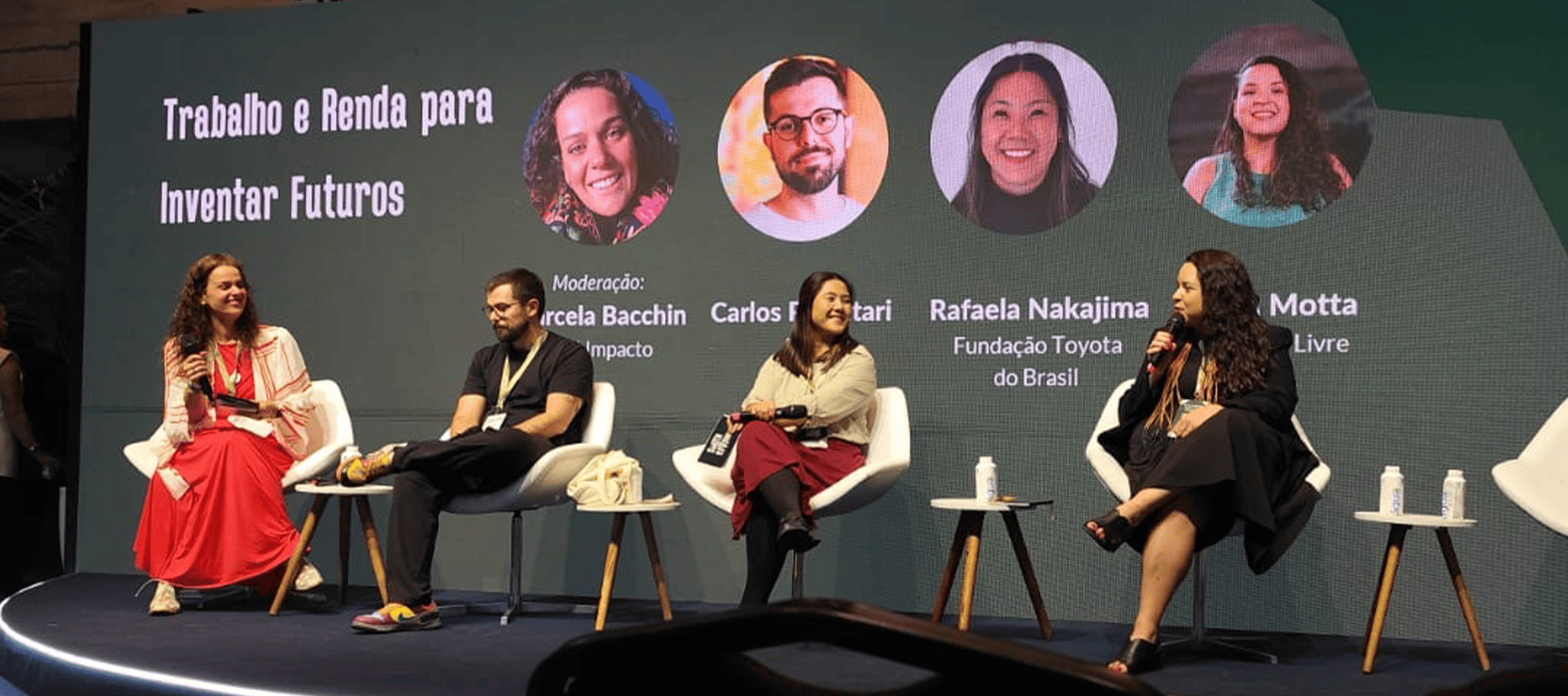
The program kicked off with a panel organized by the Brazilian Business Council for Sustainable Development (CEBDS) on fleet electrification as an industrial policy, where Mercado Libre was invited to share the story behind its 17,500-vehicle low-emission fleet. Laura Motta, the company’s Senior Sustainability Manager, later joined a discussion on productive inclusion at South of the Future at MASP, while Senior Environmental Manager Rodrigo Brito headed to Cubo Itaú for Brazil Climate Solutions, where he discussed the future of sustainable logistics in the age of AI.
During the World Climate Summit discussions at São Paulo Climate Week, Laura also joined the panel “Nature as Infrastructure for a Resilient Economy,” alongside Renata Piazzon, founder of the Arapyaú Institute; Letícia Guimarães, Head of Biodiversity at Vale; and David Laborde, Director of the Agrifood Economics and Policy Division at the Food and Agriculture Organization of the United Nations (FAO), moderated by Mauro Weber Rosito of The Nature Conservancy. In the same program, Rodrigo led a fireside chat on transportation and logistics, further expanding Mercado Libre’s contribution to the event.
During the panel, Laura highlighted the opportunity to share knowledge and learn from traditional communities that build livelihoods while keeping forests standing. “There are many viable models and solutions developed by people who live off the forest and contribute to the preservation of biomes.” She cited the Biomes in a Click program, a pioneering Mercado Libre initiative that supports associations, cooperatives, and businesses in the sociobiodiversity sector as they enter the digital economy and reach consumer markets.
Through training, special commercial terms, easier access to logistics and financial solutions, brand development support, and greater visibility on the marketplace, the initiative aims to help these businesses reach more customers while preserving the cultural and territorial identity that makes them unique. According to Laura, this relationship has generated a series of valuable learnings. “There is an exchange of knowledge that involves recognizing the expertise that has been used to preserve our cultural and social heritage, one of our country’s greatest assets.”
Laura identified logistics — particularly in remote areas — and the need to drive demand as two of the main challenges to bringing more sociobioeconomy products to consumer markets. Many biodiversity-based products and ingredients, such as tucupi and babassu, are still largely unknown outside their areas of origin. This means not only expanding sales channels, but also connecting these products with consumers, telling their story, showing what makes them special, and recognizing the communities and knowledge behind them.
Learn more in the Biomes in a Click Whitepaper: Driving the Sociobioeconomy in Latin America.